
While we often worry about internal issues with our dogs and pay close attention to their diet and exercise to keep them as healthy as possible, it's easy to forget that their skin can also be a source of health problems and pain. From allergies to autoimmune diseases, skin conditions are prevalent in dogs and must be addressed quickly to avoid discomfort. If you suspect your dog might be dealing with a skin condition, you may have turned to the internet to self-diagnose. At Dermatology Clinic for Animals, we work extremely hard to bring you the accurate information you need. To avoid the misinformation you can stumble across online; we've taken the most frequently asked questions about dog dermatology and answered them as thoroughly and accurately as possible to ensure you have the facts.
If you're looking for a highly trained veterinarian in Lacey, WA, we'd love to see your dog to address any skin issues they're experiencing and relieve their discomfort, so please call us at (360) 350-4756 .
What causes skin problems in dogs?
The cause of skin issues in dogs can range from allergies to parasites and endocrine disturbances such as thyroid issues. The type of skin problem experienced varies depending on each situation.

Are dermatology issues painful for my dog?
Skin issues in dogs can be painful, depending on the cause and extent. Some skin issues simply cause hair loss, but the most common skin issues we see at Dermatology Clinic for Animals are related to allergies, dermatitis, and inflammation. Those hurt because they itch, with the skin becoming red, irritated, and it may also burn. It's no different than a human having a rash or poison ivy on their arm.
What are some signs and symptoms that my dog may have a skin condition?
There are several fairly obvious signs that your dog may be dealing with a skin condition, from scratching to bumps.
Signs of a skin condition in dogs include:
- Hair loss
- Scratching
- Scabbing on the skin
- Skin lesions, red spots, or raised bumps
- Redness of the skin
- Ear infections
- Chewing their feet
The AVMA has also identified behavioral issues as a possible sign that your dog is dealing with a skin condition.
What to Expect During Your Dog's Skin Evaluation
The examination begins with a thorough assessment of your dog's skin, ears, hair coat, and nails. Depending on the lesions present and your dog's history, additional diagnostic testing may be recommended.
Skin and ear cytology are often the first diagnostic tests performed when abnormalities such as redness, discharge, odor, pustules, crusts, hair loss, or greasy skin are present. Cytology allows us to identify bacteria, yeast, inflammatory cells, and other changes that may be contributing to your dog's skin or ear disease. If no visible skin or ear abnormalities are present, cytology may not be necessary.
A skin scraping may also be performed depending on the appearance and location of the skin lesions. This test helps us evaluate for various mites that can live on or within the skin.
In some cases, a fungal culture (dermatophyte test medium or DTM culture) may be recommended to evaluate for ringworm. This is performed by gently brushing the hair coat with a sterile toothbrush to collect hairs and skin debris for culture.
Because every patient is different, not every dog requires every test, and diagnostic recommendations are tailored to your dog's individual signs and medical history.
In addition to evaluating your dog's skin and ears, a complete physical examination is performed during every visit. This includes an assessment of the ears, paws and nails, eyes, lymph nodes, heart and lungs, abdomen, and overall health to help identify any underlying medical conditions that may be contributing to your dog's skin disease or affecting their treatment plan.
What are some common skin problems in dogs?
While dogs' most common skin problems are allergies and allergic dermatitis (otherwise known as Atopy), veterinarians see several skin conditions.
The most common skin conditions in dogs include:
- Allergies
- Allergic dermatitis (Atopy)
- Staph infections
- Yeast infections of the skin or ears
- Ear mites (more common in cats)
- Parasites such as fleas, ticks, Demodex mange, and Sarcoptic mange
- Autoimmune diseases such as pemphigus and lupus
What if my dog's skin problems go untreated?
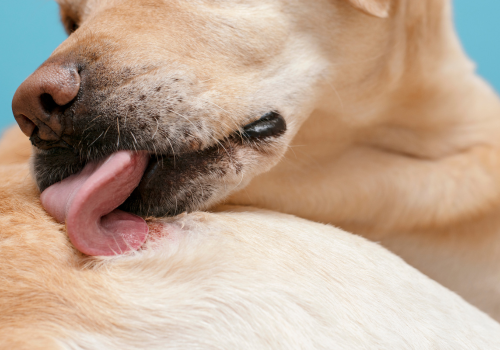 Some skin conditions can be severe and cause considerable discomfort for your dog. If your dog has severe allergies, the itching will often lead to a secondary bacterial or fungal infection. This will cause weight loss, a lack of interest in playing due to feeling sick, pain, and possibly more medications. However, some skin conditions are far less serious, such as when older Boxers develop chronic alopecia. This is painless, symmetrical hair loss. Skin issues can fall on either end of the spectrum, depending on the condition.
What is the difference between atopic dermatitis and contact dermatitis?
Atopic dermatitis is Atopy, which is a fancy word for environmental allergies. For example, if a dog is allergic to pine needles and lives next to a pine forest, they're likely to get atopic dermatitis. These allergens are in the air, so your dog can inhale them and be affected. Contact dermatitis, as the name implies, occurs when a dog with allergies touches something that causes a reaction. For example, if they're allergic to St. Augustine grass and that's what's in their backyard, laying in the grass will cause a reaction due to contact. It typically affects a very localized area on their body that was exposed to the offending allergen.
What are curable versus incurable skin problems in dogs?
Curable infections are instances when you have a bacterial staph infection for no underlying reason or condition that we don't consider chronic. For example, your dog might have gotten sick due to a depressed immune system, and they got a staph infection. Your veterinarian will treat that with the appropriate dose and duration of antibiotics, and it heals.
Allergies are an example of an incurable skin problem in dogs, possibly requiring treatment for the remainder of their life. Other incurable skin conditions are caused by the previously mentioned autoimmune diseases, such as pemphigus and lupus. We can control those and treat them, but we can't cure them.
If you live in or near Lacey, WA, and are looking for quality pet care, come visit us at Dermatology Clinic for Animals where your pet is our priority. Contact us at (360) 350-4756 to set an appointment, or email us at [email protected]. Our staff would love to talk with you! Don't forget to follow us on social media: Facebook, Instagram.