
Cat Dermatologic Surgery FAQs
Hearing that your cat needs surgery can be stressful, but many dermatologic procedures are performed to improve comfort, diagnose disease, or remove problematic tissue before it progresses. At Dermatology Clinic for Animals, our surgical focus is on conditions affecting the skin and ears, using advanced techniques to help cats live happier, healthier lives.
If your veterinarian has recommended surgery or a biopsy for your cat's skin or ear condition, you may have turned to the internet looking for answers. Unfortunately, online information can be confusing or misleading. We've answered some of the most common questions about dermatologic surgery to help you better understand what to expect.
If you're looking for a highly trained veterinarian in Lacey, WA, we'd be happy to evaluate your cat's skin or ear condition. Please call us at (360) 350-4756 .
What types of surgeries do you perform in cats?
At Dermatology Clinic for Animals, our surgical procedures are centered around dermatology and ear disease rather than routine general surgery.
Common procedures include:
- Skin biopsies to diagnose complex skin diseases
- Surgical removal of skin masses or tumors
- CO₂ laser surgery for select skin lesions
- Cryosurgery for appropriate superficial lesions
- Ear canal polyp removal
- Laser ablation of selected ear canal masses for palliative management
- Diagnostic procedures to evaluate chronic ear disease
For conditions requiring more extensive surgery, such as total ear canal ablation or procedures involving other body systems, we will recommend referral to the appropriate surgical specialist.
Why would my cat need a skin biopsy?
Many skin diseases cannot be diagnosed by appearance alone. A biopsy allows tissue to be examined under a microscope by a veterinary pathologist, helping identify autoimmune diseases, cancers, unusual infections, hormonal disorders, and other complex skin conditions. The results often guide the most effective treatment plan.
When is surgery recommended for skin masses?
Skin masses may be recommended for removal if they are growing, ulcerated, uncomfortable, bleeding, interfering with normal function, or if there is concern they may be cancerous. Early removal and biopsy can often provide valuable information before a lesion becomes more advanced.
My cat has an ear canal mass. Can it be completely removed?
Not always. Because of the anatomy of the ear canal, complete removal of masses through the ear opening is often impossible. In some cases, we can perform laser ablation or palliative removal to improve comfort and reduce obstruction, but recurrence is possible.
If complete excision is needed, referral to a board-certified veterinary surgeon for procedures such as total ear canal ablation may be recommended.
Does my cat need blood work before anesthesia?
We strongly recommend pre-anesthetic laboratory testing to evaluate your cat's overall health and ensure anesthesia is as safe as possible. Blood work allows us to assess organ function, red and white blood cell counts, platelet numbers, electrolyte balance, and other important values that may influence anesthetic planning.
If abnormalities are detected, additional diagnostics or treatment may be recommended before proceeding.
Who monitors my cat during anesthesia?
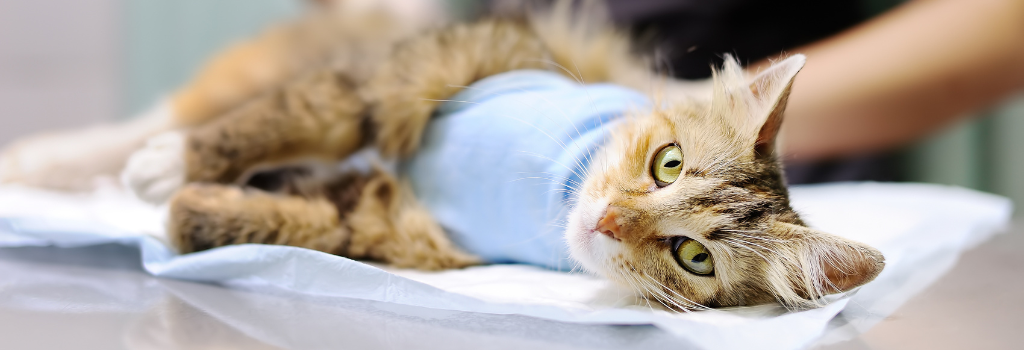
Your cat is continuously monitored throughout the procedure by trained veterinary personnel using specialized monitoring equipment. Heart rate, oxygen levels, blood pressure, electrocardiogram (ECG), and other vital parameters are closely observed while the veterinarian performs the procedure.
How long does recovery take?
Recovery depends on the procedure performed. Most skin biopsies and small mass removals heal within 10 to 14 days. Larger surgical sites or more extensive procedures may require additional healing time.
Your veterinarian will provide individualized discharge instructions based on your cat's procedure.
How can I help my cat recover at home?
A calm, quiet environment is one of the best ways to promote healing. Follow all medication instructions carefully and prevent your cat from licking or scratching the surgical site. Many cats will need to wear an Elizabethan collar or other protective device until healing is complete.
Monitor the incision daily for redness, swelling, discharge, or excessive discomfort, and contact us if you notice any concerning changes.
Why choose a dermatology-focused surgeon for skin and ear disease?
Many skin and ear conditions require more than simply removing a lesion. Determining why the problem developed is often just as important as treating it. We combine advanced diagnostic techniques with surgical expertise to identify the underlying cause of disease, whether that is allergies, immune-mediated disease, infection, cancer, or another dermatologic condition.
Our goal is not only to treat the immediate problem but also to help prevent recurrence and improve your cat's long-term quality of life.
At Dermatology Clinic for Animals, your pet is our priority. If you have questions about your cat's skin or ear condition or whether surgery may be beneficial, call us at (360) 350-4756 or email [email protected]. Our team would be happy to help.