Transmission or Cause
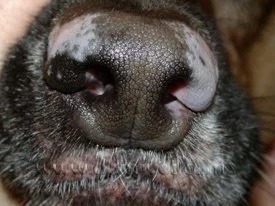
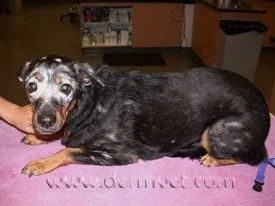
Vitiligo is a hereditary disorder of skin and/or hair pigment loss and is caused by immune-mediated destruction of the pigment-producing cells in the skin.
Affected Animals
Although any animal or breed can be affected, vitiligo has an increased incidence in Rottweilers, Doberman pinschers, Belgian Tervurens, and Siamese cats.
Clinical Signs
Symptoms usually begin in young adulthood. Patchy areas of pigment loss may involve the skin, hair, or both. The most commonly affected areas include lips, nose, eyelids, face and footpads. There is no associated itching, inflammation, rash, skin ulcers, or crusts.
Symptoms
See Clinical Signs.
Diagnosis
Careful examination of clinical signs and skin biopsy to rule out other more serious causes of pigment loss such as lupus, uveodermatologic syndrome, or skin cancer are necessary. Skin biopsy shows loss of pigment and pigment-producing skin cells, but minimal to no inflammation or other abnormalities.
Prognosis
Although the prognosis for regaining normal skin pigmentation is poor, in animals vitiligo is only a cosmetic disorder, with no effect on quality of life. In some animals, spontaneous repigmentation may occur.
Treatment
There is no effective treatment for vitiligo in companion animals. In humans, treatment options include topical immunosuppressive medications or ultraviolet phototherapy, but therapy often causes only partial improvement.