Transmission or Cause
Vitamin A-responsive dermatosis is an incompletely understood disorder of skin proliferation and maturation (keratinization) which is often breed-related and therefore may have a genetic basis.
Affected Animals
Vitamin A-responsive dermatosis is a rare disorder which usually affects young (2-3 year old) American cocker spaniels.
Clinical Signs
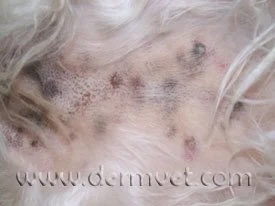
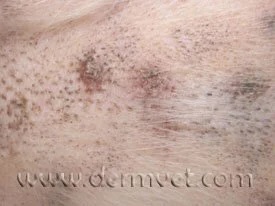
Skin lesions include plugged, dilated pores/follicles, crusts, and crusty plaques, especially on the ventral and lateral chest and abdomen. The crusty area may have protruding fronds of keratin, and hairs in affected areas are encircled by clumps of skin cells (follicular casts). The haircoat may be dull, dry, and scaly, and secondary bacterial yeast infections are common, causing odor and itching. The ears may be affected by excess wax accumulated and inflammation.
Symptoms
See Clinical Signs.
Diagnosis
The diagnosis of vitamin A-responsive dermatosis is made by first ruling out other more common causes of crusty, scaly skin lesions such as bacterial, fungal, or parasitic infections. Depending on symptoms, evaluation for environmental or food allergies may be necessary. Biopsies of affected skin show marked excessive scaling of skin and hair follicles (orthokeratotic hyperkeratosis).
Prognosis
The prognosis is good as long as secondary infections are controlled, although most animals require lifelong vitamin A supplementation.
Treatment
Vitamin A 10,000 IU orally with a fatty meal daily should cause visible improvement within 6-8 weeks. Additionally, antiseborrheic shampoos and moisturizing conditioners 1-2 times weekly are helpful. Treatment of any secondary bacterial or yeast skin infections may also be necessary.
Prevention
No preventative measures are known.