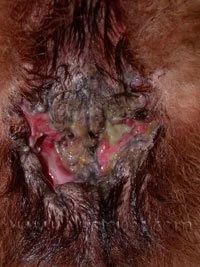
Also Known As: Anal Furunculosis
Transmission or Cause
Perianal fistulas are caused by inflammation of the tissues around the anus causing extensive swelling and ulceration. The cause is not clear but dogs with perianal fistulas are suspected to have immune dysfunction. Some people believe that colitis and perianal fistulas in the German Shepherd Dog are similar to Crohn's Disease in people.
Affected Animals
The majority of cases of perianal fistulas occur in German Shepherds. Irish Setters are the second most common breed but some other breeds reported include Labrador Retrievers, Old English Sheepdogs, Border Collies, Bulldogs, and some mix breeds. Middle-aged intact male dogs are most often affected.
Clinical Signs
Common clinical signs include difficult and painful defecation, perianal licking and chewing, foul-smelling perianal discharge, low tail carriage, weight loss, and lethargy. Some dogs may have concurrent inflammatory bowel disease. The lesions can develop gradually and signs may not be noticed by the owners for a long time.
Symptoms
See Clinical Signs.
Diagnosis
Diagnosis of perianal fistulas is based on history, clinical signs, and by ruling out other causes of perianal inflammation. A rectal exam is usually performed and since perianal fistulas are very painful, the dog may have to be sedated to examine the area thoroughly.
Prognosis
The prognosis is variable. Many dogs need lifelong control with anti-inflammatory medications and some may undergo temporary remission.
Treatment
Treatment of perianal fistulas may involve antibiotics for secondary infections, long-term (3-5 months) anti-inflammatory therapy with cyclosporin or oral steroids, topical anti-inflammatory ointments such as tacrolimus, and diet manipulation. Surgery following medical therapy to remove residual lesions may be helpful in some cases.
Prevention
There are no known preventative measures to avoid the development of perianal fistulas.