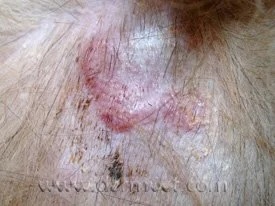
Also Known As: Sterile granuloma, sterile pyogranuloma
Transmission or Cause
Unknown, but thought to be an immune-mediated disease.
Affected Animals
This disease is uncommon in dogs and very rare in cats. Any dog, of any sex or breed can be affected, however, collies, Weimaraners, Boxers, Great Danes, and Golden retrievers may be predisposed.
Clinical Signs
Dogs usually have masses or nodules that are not itchy or painful. These nodules may lose their hair and even ulcerate. The lesions typically occur around the eyes, ears, over the bridge of the nose, muzzle, or feet but can occur anywhere. In cats, the lesions can be mass-like to more diffuse lesions and are usually itchy. They typically occur around the ears and head.
Symptoms
See Clinical Signs.
Diagnosis
This disease can look identical to infectious diseases (bacterial, fungal), reactions to foreign material (example: foxtail), or some types of cancer. Biopsy, culture, and sometimes blood work are needed for diagnosis.
Prognosis
Typically good for dogs and cats, but life-long therapy may be needed for some dogs.
Treatment
In dogs, treatment with systemic steroids, such as prednisone, is usually successful. Sometimes doxycycline or tetracycline in combination with niacinamide will provide resolution of the lesions. Rarely, more potent immunosuppressive drugs may be needed. In cats, lesions will typically regress without treatment over several months.
Prevention
Unfortunately there is no known way to prevent this disease.