Transmission or Cause
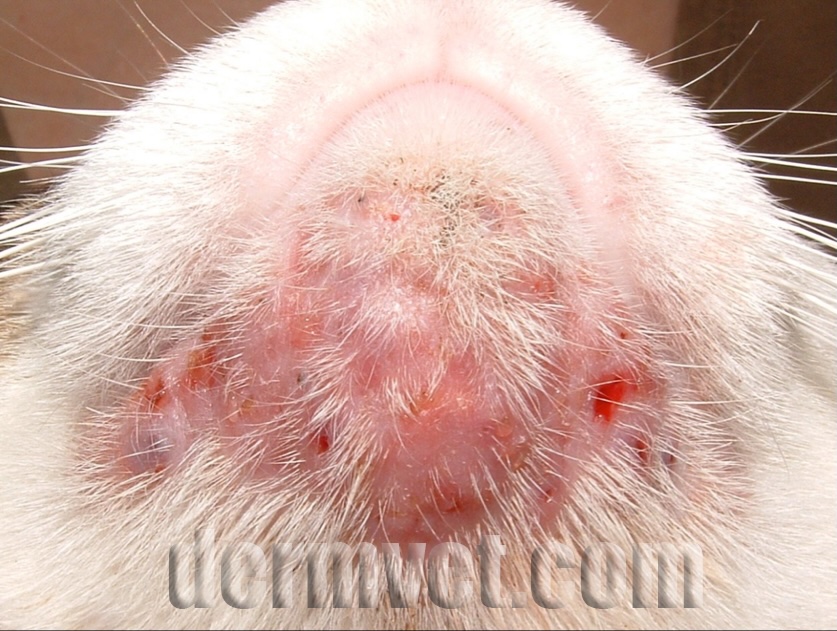
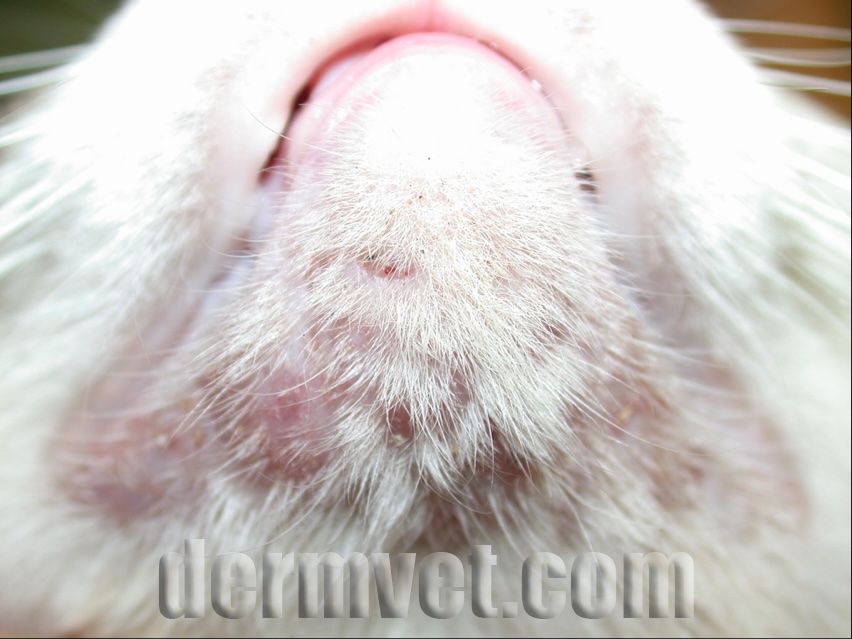
Feline chin dermatitis can be a symptom of underlying infection (fungal/demodex/bacterial/viral), contact hypersensitivity to plastic or stainless steel, or be related to the large glands on the chin which, when hair follicles and oil gland ducts become plugged and cause rupture of the glands, can create a severe inflammatory reaction due to the oils released under the skin.
Affected Animals
Any cat can develop feline acne; infectious causes of chin dermatitis such as feline demodex are more common in immunosuppressed cats, and allergic cats can develop chin dermatitis due to scratching and rubbing of the chin.
Clinical Signs
Chin dermatitis can show mild symptoms such as patchy hair loss, small crusts, and plugged hair follicles (comedones) with black flecks of oily debris; in severe cases the plugged follicles can rupture, creating chin swelling, inflammation, pain, and drainage.
Symptoms
See Clinical Signs.
Diagnosis
Diagnosis of feline acne is made by clinical examination, and microscopic examination +/- bacterial and fungal cultures to look for infectious causes of chin dermatitis such as bacterial, fungal and demodex mite infections. In some cases biopsy is performed and usually shows inflammation and rupture of hair follicles.
Prognosis
The prognosis is good for most cases, although recurrence is possible and some cats require intermittent topical treatments for control.
Treatment
Remove plastic and stainless steel bowls and use ceramic bowls. Treatment of milder cases of feline acne can involve periodic use of mild antimicrobial or salicylic acid wipes and/or antibiotic +/- steroid-containing ointments. Benzoyl peroxide shampoos/gels may be helpful to reduce follicular plugging, but can be very irritating in some cats and should be used with caution. Topical retinoid creams/gels may be helpful in some cases. In severe cases, systemic antibiotics +/- steroids are used. In cases that are suspected to have a viral trigger, antiviral therapy may be tried such as l-lysine.