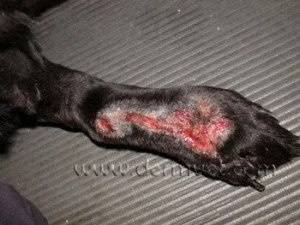
Also Known As: Acral Lick Dermatitis, Acral Lick Furunculosis, Lick Granuloma.
Transmission or Cause
The causes of acral lick granulomas include infections caused by bacteria, fungi, or mites; allergies, cancer, joint disease, or previous trauma; and an obsessive-compulsive disorder caused in some dogs by boredom. Dogs are incited by their condition to lick an area until they cause hair loss and erosion of the superficial skin layers. The consequence is further itching, which in turn results in more licking. This itch-lick cycle is exacerbated by the fact that damaged cells release endorphins, or brain chemicals, that are powerful analgesics. The licking may with time cause secondary infections, thickening of the skin, and changes in pigmentation.
Affected Animals
Acral lick granuloma may affect dogs of both sexes and all breeds; however, males or dogs that are older than five years are more often affected. Breeds disposed to this condition include the Great Dane, Doberman pinscher, Labrador retriever, golden retriever, German shepherd, and Irish setter.
Overview
A commonly seen skin disorder of dogs, acral lick granulomas are skin wounds that are worsened by a dog's constant licking of the affected area. Because the repeated licking hinders resolution of the lesion, dogs must be prevented from licking the acral granuloma until the wound has healed completely. A veterinarian can implement appropriate medical therapies to treat the lick granuloma and to prevent recurrence.
Clinical Signs
Lick granulomas are skin wounds typically located on the distal area of the front leg or hind leg of a dog. Some dogs may have more than one lick granuloma at a time. These lesions usually appear as firm, raised, hairless areas of skin that may be hyperpigmented, or darkened with pigment, due to the dog's chronic licking of the area. The center of the lesion is usually ulcerated, red, and moist, or may be covered by a scab.
Symptoms
See Clinical Signs.
Description
An acral lick granuloma is a lesion, usually located on the distal part of one of the limbs of dogs, which is caused or worsened by the animal's obsessive licking of it. Damaged cells are believed to release pain-relieving endorphins that addict the dog to the licking and mutilation of the lesion. The possible causes include boredom, trauma, arthritis or other joint problems, allergies, and skin infection. Treatment is usually lengthy and often only minimally effective in chronic lesions. Early interventions have the best chance of success.
Diagnosis
Diagnosis of acral lick granuloma and its cause requires a thorough history and physical exam. The following tests may be performed in order to determine the underlying cause of skin lesions: cellular evaluation using a slide impression of the mass, biopsy, allergy testing, and x-rays. Underlying conditions of the lesions include joint disease, cancer, bacterial or fungal infection, demodex mite infection, previous trauma, allergy, and psychogenic licking.
Prognosis
Because acral lick granuloma is difficult to cure, veterinarians usually give it a guarded prognosis. Dogs that receive early treatment have a better prospect of recovery than dogs with chronic conditions.
Treatment
Treatment of acral lick granuloma requires addressing the suspected cause of the lesions. Bacterial infections are treated with antibiotics for weeks to months. Arthritis is treated with pain management and joint therapy. The dog may be prevented from licking using a collar, muzzle, or bandage. Oral antidepressant medications may be helpful. Severe cases may call for corticosteroid injections, surgical removal, or laser surgery.
Prevention
There are few recommended measures for prevention. Dogs suffering from boredom or from the stress of being left alone for too long should be given a more stimulating and socially interactive environment.